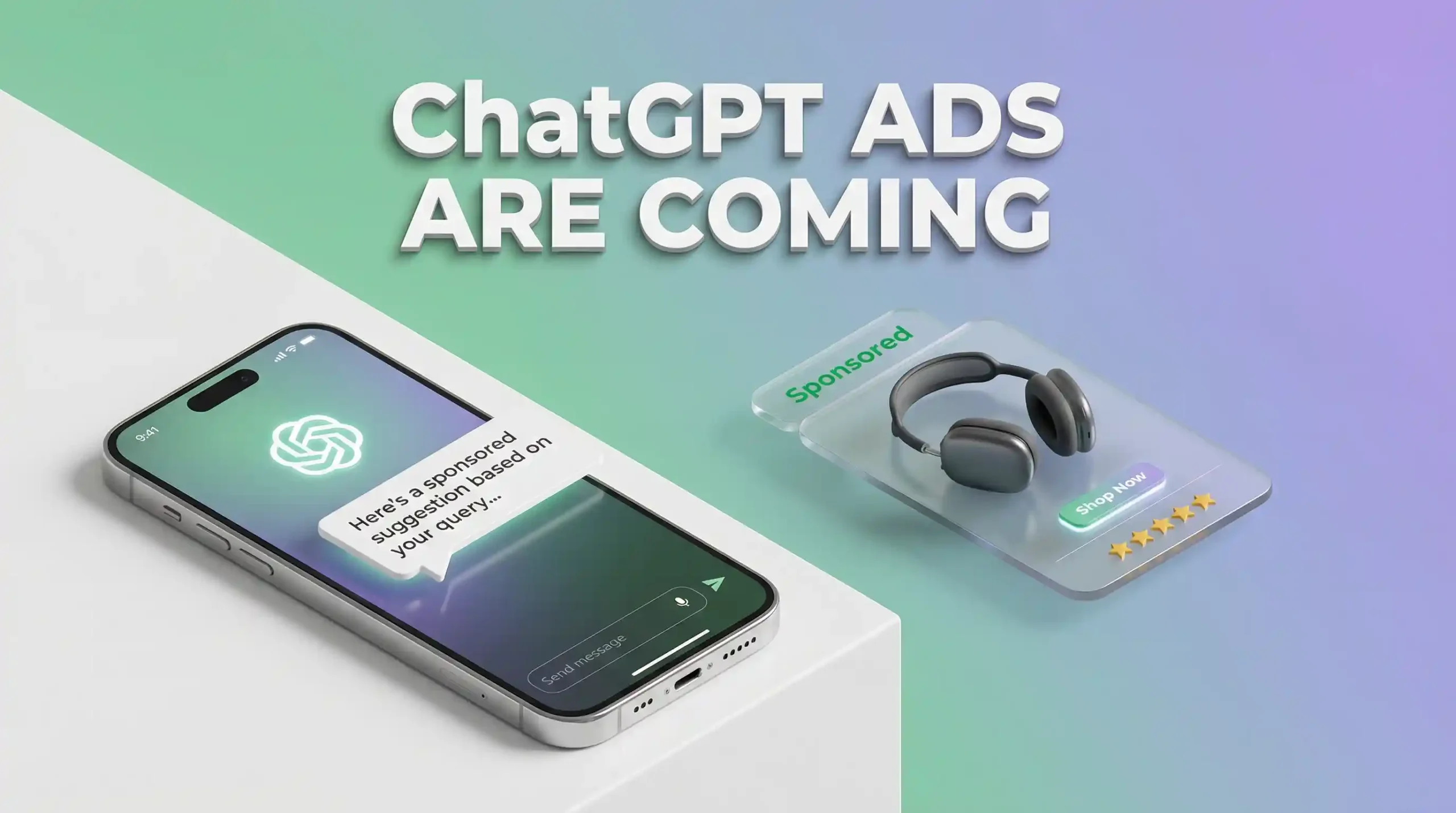
If you’ve been using ChatGPT lately, you might want to brace yourself for some changes. OpenAI just dropped a pretty big announcement on January 16th—they’re introducing ads to ChatGPT. And honestly? It’s kind of a game-changer for anyone running an online business.
Now, before you roll your eyes thinking “great, another ad platform to figure out,” hear me out. This isn’t just another billboard on the digital highway. We’re talking about advertising in a completely new context—one where people are actively asking questions and looking for solutions. That’s basically marketing gold.
Let me break down what’s happening, who’s going to see these ads, and more importantly, what you should be thinking about as an e-commerce business owner.
So What Exactly Did OpenAI Announce?
Here’s the deal: OpenAI officially announced that they’re starting to test ads in ChatGPT. But they’re being pretty careful about it—at least according to their announcement.
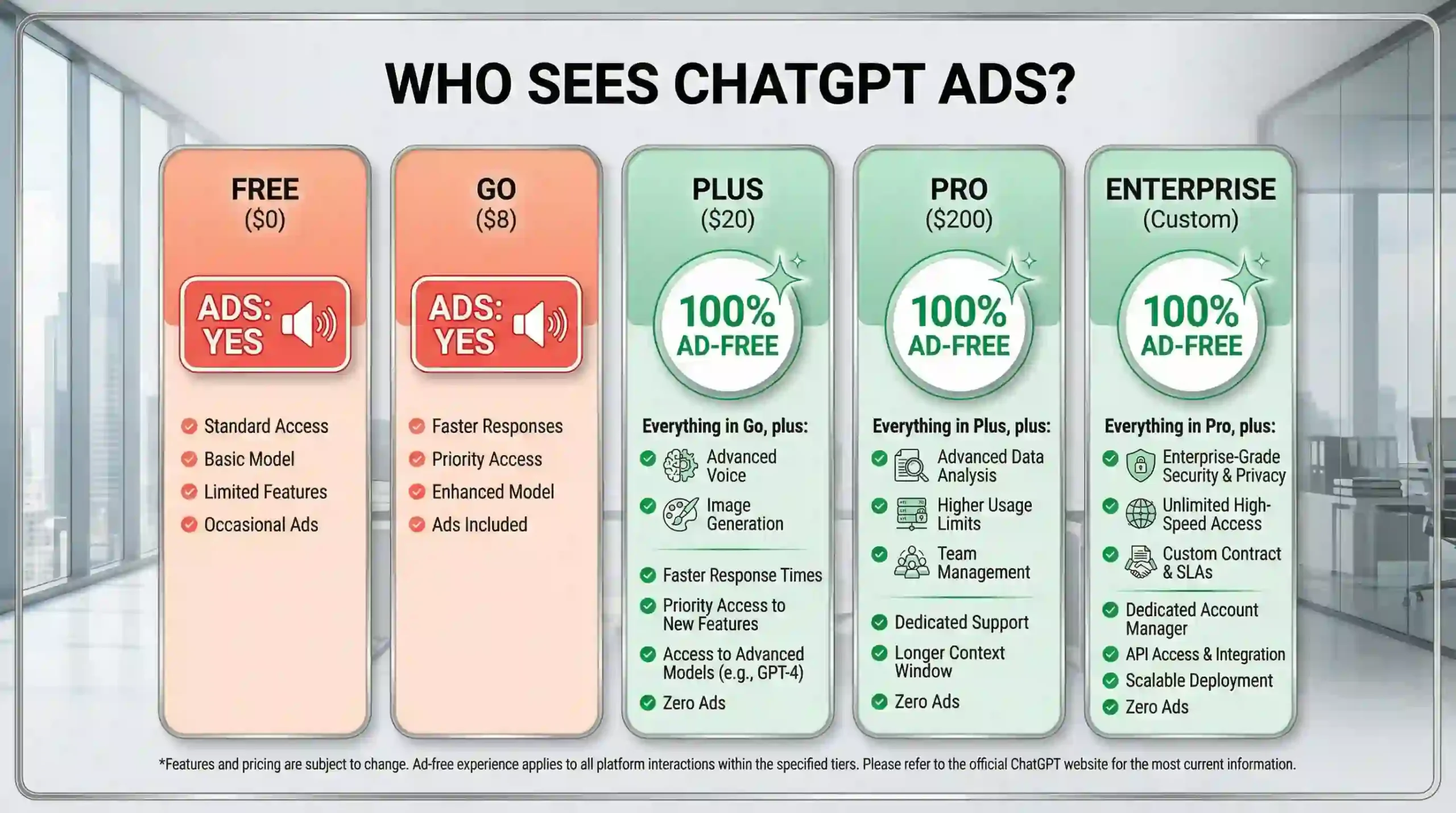
The ads are rolling out in the U.S. first, and only for people using the free version or their new $8/month “Go” tier. If you’re paying for Plus, Pro, Business, or Enterprise? You’re good. No ads for you.
They’re calling it a test phase that’ll kick off “in the coming weeks,” which in tech-speak usually means “soon, but we’re not committing to an exact date.” Smart move on their part, honestly.
Who’s Going to See These Ads?
This is where it gets interesting. OpenAI is being pretty specific about who sees what.
Free Users and Go Subscribers
If you’re using ChatGPT for free or just signed up for their new Go plan (which they also just launched), you’ll start seeing ads at the bottom of your chat responses. But there’s a catch—you have to be logged in and over 18.
The Go tier is actually kind of clever. For $8 a month, you get more messages, better features, and yeah, some ads. It’s positioned as the “middle ground” option for people who want more than free but aren’t ready to drop $20 on Plus.
Premium Users Stay Ad-Free
Here’s the thing about the premium tiers—they’re completely ad-free. Plus users ($20/month), Pro users ($200/month), and anyone on Business or Enterprise plans won’t see a single ad. Ever.
It’s basically OpenAI’s way of saying “we need to make money to keep this thing running, but if you pay us, we’ll leave you alone.” Can’t really argue with that logic.
What Will These Ads Actually Look Like?
Okay, so this is where it gets really interesting for us marketers.
They’re Conversational
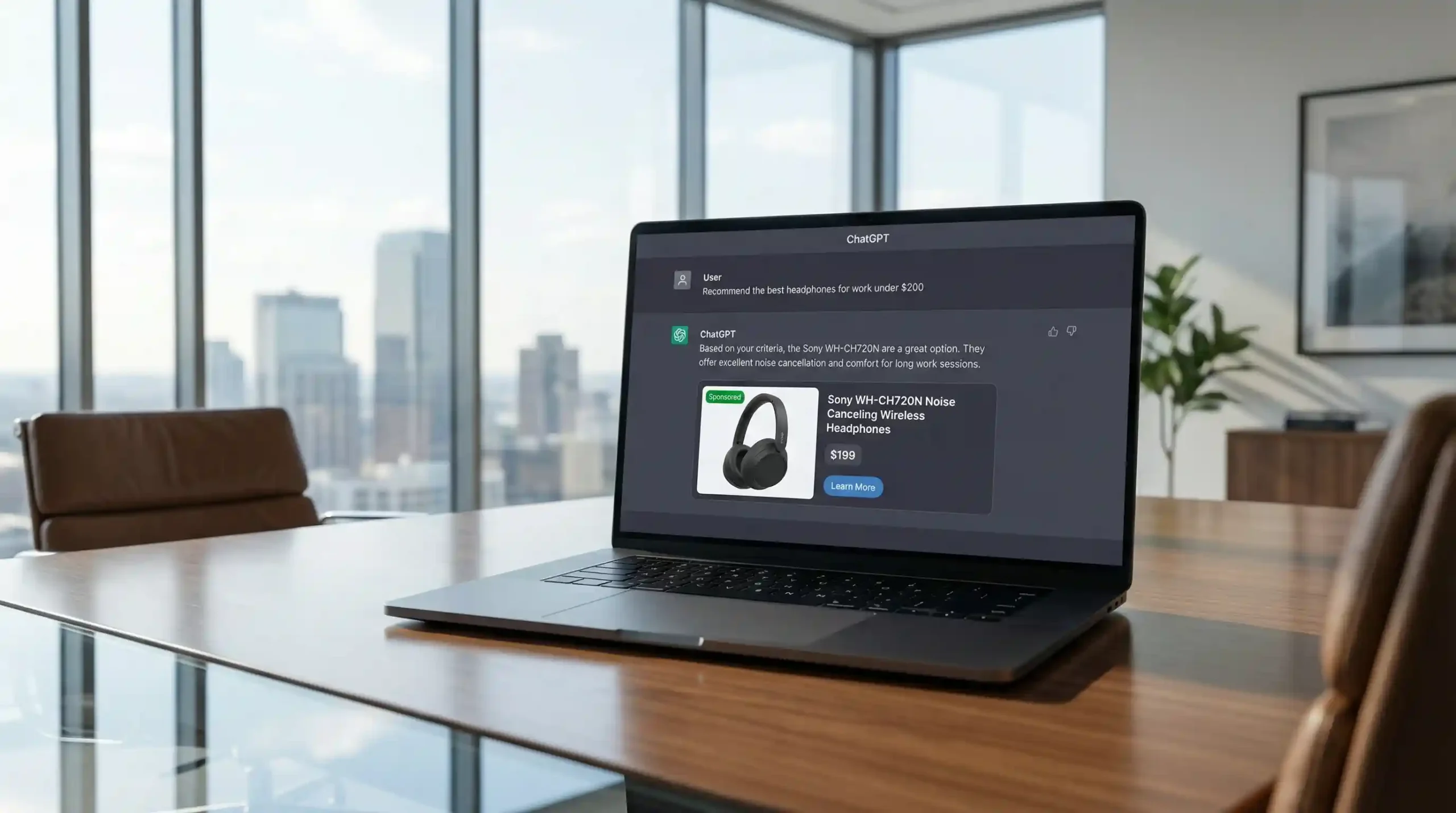
The ads won’t be those annoying pop-ups or banner ads you’re used to ignoring. They’ll appear at the bottom of ChatGPT’s answers, clearly labeled as “sponsored.” And here’s the kicker—they’re supposed to be relevant to whatever conversation you’re having.
Think about that for a second. Someone’s literally asking ChatGPT about the best laptop for video editing, or what running shoes are good for marathons, or how to start a podcast. And right there, at the perfect moment, your ad could show up.
That’s not interruption marketing. That’s being helpful at exactly the right time.
Context Is Everything
This is what makes ChatGPT ads different from Google or Facebook. On Google, someone types “running shoes.” On ChatGPT, someone writes a whole paragraph about their pronation issues, their training schedule, and their budget.
See the difference? The amount of intent and context you’re working with here is insane.
The Rules OpenAI Set for Themselves
Now, I’m usually skeptical when companies promise to “do advertising differently,” but OpenAI laid out some pretty specific principles. Whether they stick to them? Time will tell. But here’s what they’re promising:
Your Answers Won’t Be For Sale
This is huge: ads won’t change what ChatGPT tells you. You can’t pay OpenAI to have ChatGPT recommend your product over a competitor’s. The answers stay independent.
Why does this matter? Because if people stop trusting ChatGPT’s responses, the whole platform becomes worthless. OpenAI knows this. So theoretically, they’re protecting the golden goose.
Your Conversations Stay Private
They’re promising not to sell your chat history to advertisers. The ads will be targeted based on the current conversation, but OpenAI says they won’t hand over your data.
In a world where every other platform seems to be mining your data for ad dollars, this is actually refreshing. Whether it holds up under investor pressure? We’ll see.
You Can Opt Out
Don’t want personalized ads? You can turn that off. Want to clear your ad data? You can do that too. And if you really hate ads, just upgrade to a paid plan.
It’s more control than you get on most platforms, honestly.
Sensitive Topics Are Off-Limits
No ads near politics, health issues, or mental health conversations. And kids under 18 won’t see any ads at all.
This is smart. The last thing OpenAI needs is a scandal about inappropriate ads showing up in sensitive conversations.
What This Actually Means for Your Business
Alright, let’s get practical. You’re running an e-commerce business. Should you care about this?
Short answer: Yes. But maybe not right this second.
It’s a New Discovery Channel
Think about how people shop online now. They Google stuff, scroll through Instagram, maybe check TikTok for reviews. Now add ChatGPT to that mix.
People are already using ChatGPT to research purchases. I’ve seen conversations where someone asks for recommendations, compares features, asks follow-up questions—basically the entire research phase of buying something.
If your ad can show up right in the middle of that conversation? That’s powerful.
First-Mover Advantage Is Real
Remember when Facebook ads were cheap because nobody knew what they were doing? Or when Instagram ads were underpriced because brands hadn’t figured them out yet?
This could be one of those moments. The businesses that figure out ChatGPT advertising first might get some serious advantages before everyone else catches on and prices go up.
But Don’t Abandon Everything Else
Here’s the thing—this isn’t going to replace Google Ads or Facebook or whatever else you’re doing. It’s just another tool in the toolbox.
Your customer journey probably looks something like this: they see your Instagram ad, Google your brand, read some reviews, ask ChatGPT for comparisons, come back to your site, maybe sign up for your email list, then finally buy.
ChatGPT ads just give you another touchpoint in that journey.
How to Prepare (Even Though It’s Not Live Yet)
Okay, so the ads aren’t actually running yet. But that doesn’t mean you can’t prepare.
Start Documenting Customer Questions
Right now, today, start collecting the actual questions your customers ask before they buy. Check your customer service emails. Look at your Instagram DMs. Read the reviews.
Why? Because those questions are probably similar to what people are asking ChatGPT. And when you know the questions, you can craft ads that answer them.
Think Conversational
Your regular ad copy probably sounds like “Buy Now! 50% Off! Limited Time!” That’s fine for Facebook. It’s probably going to be weird in ChatGPT.
Think more like “We help runners with flat feet find shoes that won’t cause pain after mile 15.” See how that feels more like a conversation?
Watch What Happens
OpenAI is going to be releasing updates about this. Follow their blog. Join some marketing communities. Keep an eye on who’s testing these ads first.
Being informed early means you can move fast when opportunities open up.
Set Aside Some Budget
You don’t need to commit huge amounts of money right now. But start thinking about allocating maybe 5-10% of your ad budget to test ChatGPT when it becomes available.
Treat it like an experiment, not a sure thing.
The Challenges Nobody’s Talking About
Look, I’m excited about this opportunity, but let’s be real about the challenges too.
People Might Hate It
ChatGPT feels personal. It’s like having a conversation with someone. Putting ads in that space might feel intrusive to people, even if OpenAI does it carefully.
If there’s a backlash, advertisers are going to have to tread very carefully.
Measuring Success Won’t Be Easy
How do you track ROI on a 20-minute conversation where your ad appeared once at the bottom? Traditional metrics like click-through rate might not tell the whole story.
We’re probably going to need new ways of thinking about what “success” means in this context.
Creating Good Ads Will Be Hard
Writing effective ChatGPT ads is going to require different skills than banner ads or search ads. Your team might need training, or you might need to hire people who understand this format.
It’s not just a technical challenge. It’s creative too.
What’s Happening with Other AI Platforms?
ChatGPT isn’t alone in this space, which is worth paying attention to.
Google’s got Gemini integrated into search, but they’re not putting ads directly in the AI responses. They’re keeping them separate. Different approach entirely.
Meta started using information from their AI chatbot to target ads better. So they’re going the data route instead of the direct ad placement route.
The point? The AI advertising landscape is still figuring itself out. There’s no playbook yet. Which means opportunities for people willing to experiment.
Looking Ahead: What Comes Next
Here’s what I think happens over the next year or two.
Search Behavior Changes
More people are going to start conversations with AI instead of typing keywords into Google. It’s just easier and more natural.
That shift is going to redistribute advertising budgets. Maybe not overnight, but gradually.
Commerce Gets More Conversational
Eventually—maybe not this year, but soon—we might see entire shopping experiences happen inside chat interfaces. Ask questions, get recommendations, make purchases, all without leaving the conversation.
Sounds futuristic, but the technology’s basically there already.
Brand Authority Matters More
If AI is going to be suggesting products and brands, you want your brand to be one that gets mentioned. That means content marketing, thought leadership, building actual authority in your space.
SEO might evolve into “AIO”—AI Optimization. Who knows.
What You Should Do Right Now
Alright, practical advice time. Here’s what I’d do if I were running an e-commerce business right now:
This Month:
- Start a document tracking customer questions
- Subscribe to OpenAI’s blog and set up Google Alerts for ChatGPT advertising news
- Talk to your team about potentially testing this when it launches
- Look at your current ad budgets and see where you could pull 5-10% for experiments
Next Three Months:
- Actually try using ChatGPT the way your customers might—ask it questions about products in your category
- Draft some conversational ad copy just to practice
- Watch what early adopters are saying about the ad platform when it launches
- Set up a small budget specifically for ChatGPT testing
This Year:
- Run some actual test campaigns when the platform opens up
- Track what works and what doesn’t—be scientific about it
- Share learnings with your team and adjust strategy
- Decide if this should become a permanent part of your marketing mix
Final Thoughts
Look, I get it. Another advertising platform means more complexity, more budget decisions, more things to learn. But here’s why I think this one’s worth paying attention to:
ChatGPT represents a fundamentally different way people are interacting with information. It’s not search. It’s not social media. It’s something new.
And when something genuinely new shows up in marketing, the people who figure it out early usually benefit. Not always—sometimes new platforms flop. But often enough that it’s worth experimenting.
The key is going into this with the right mindset. Don’t think of ChatGPT ads as just another place to blast your message. Think of them as a way to be genuinely helpful to people who are already asking questions related to what you sell.
If you can show up at the right moment with actually useful information—and yeah, maybe mention that you sell the thing they’re looking for—that’s not annoying. That’s helpful.
And helpful marketing? That’s the kind that actually works.
So stay informed, start preparing, and when the opportunity opens up, be ready to test it out. Just don’t bet the farm on it until you see how it actually performs for your specific business.
For more details, check out OpenAI’s official announcement about their advertising approach and the details about ChatGPT Go.
Who knows? Maybe a year from now we’ll all be wondering how we ever did digital marketing without conversational AI advertising. Or maybe it’ll be a footnote. Either way, it’s worth watching closely.